The Anatomy of Rootlessness
In the modern era, we have been sold a vision of the "Global Citizen"—a person who is at home everywhere, whose passport is full of stamps, and whose life is a seamless transition between cultures, time zones, and languages. It is a title that carries the weight of prestige and the promise of ultimate freedom. But for many who live this reality, the experience feels less like freedom and more like a slow, quiet drifting.
As a somatic therapist, I often see the hidden cost of this "globalist" lifestyle.
Beneath the excitement of the new lies a biological challenge: the human nervous system was not originally designed for the speed of modern relocation. We are tribal, territorial, and sensory beings. When we move, we don't just move our belongings; we move our entire physiological history. To become a truly "Grounded World Citizen," we must move beyond the intellectual idea of being a globalist and address the somatic requirement of being a rooted human being.
The Anatomy of Rootlessness
Rootlessness is not merely a lack of a permanent address. In the body, rootlessness is a state of low-level, chronic mobilization. When we are rooted, our nervous system uses the environment to co-regulate. We know where the "safe" people are, we know the sounds of the night, and we understand the social rhythms of our community. This familiarity allows the Ventral Vagal complex—the part of our nervous system responsible for social engagement and rest—to remain active.
When we are unrooted, the environment becomes a source of "neuroceptive" uncertainty. The brain constantly asks: Am I safe here? Who can I trust? Where is my exit? This places the body in a state of constant scanning. Over time, this drains our "resiliency reservoir," leading to a feeling of being "thin" or "transparent," as if we are ghosts moving through a world we cannot quite touch.
The Shadow of the Past: Trauma and the Expat Stressor
For many world citizens, the stress of moving is not just about the present. It acts as a "key" that unlocks the door to past traumas.
Our nervous system stores every experience of instability, rejection, or lack of safety we have ever encountered. If you grew up in a household where "home" did not feel safe, or if you experienced early childhood developmental trauma, the act of moving abroad can trigger those old survival circuits.
The "Compounded Overwhelm":
When a person with a history of trauma moves to a new country, they are dealing with a "Double Burden."
The Current Stressor: Navigating a new culture and language.
The Ancestral or Early Stressor: The primal fear of being "cast out" or abandoned by the tribe.
In this state, the nervous system can quickly become overwhelmed. What might be a "minor inconvenience" for a regulated person—like a misunderstanding with a landlord or a lost suitcase—can trigger a full-scale "Fight, Flight, or Freeze" response in a person whose history is marked by instability. This is why some expats experience intense panic attacks or deep depressive shutdowns that seem "out of proportion" to their current circumstances. Their body isn't just reacting to the new city; it is reacting to every time it has ever felt unsafe in the past.
Social Interconnection: The Biological Imperative
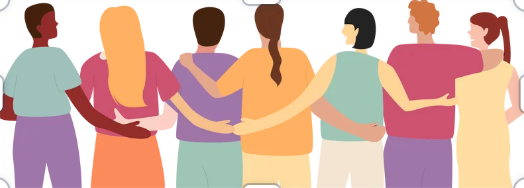
We often think of "independence" as the hallmark of the successful globalist. We pride ourselves on being able to land in a new country and "figure it out" on our own. But somatically, total independence is a myth. Humans are "obligatory gregarious" creatures. We need the nervous systems of others to help regulate our own.
Isolation is a biological threat. When we lack social interconnection, our bodies stay in a state of "high alert." One of the most important steps in the healing process for the unrooted citizen is the re-establishment of Relational Safety.
This doesn't mean having a thousand Facebook friends or attending every networking mixer. It means having at least one or two people where your nervous system can "drop" and feel seen. It is the experience of "limbic resonance"—where two nervous systems recognize and soothe one another. Without this, the expat remains in a state of "functional freezing," going through the motions of life but never truly arriving.
Establishing Safety: The Somatic Path to Grounding
As a Somatic Therapist, my work with global citizens focuses on moving the needle from "survival" back to "thriving." We do this by building safety from the bottom-up.
1. The "Neuroception" of the Home Space
Before you can feel safe in a new country, you must feel safe in your immediate skin and your immediate room. We work on creating "sensory anchors" in your living space. This might involve intentionally using scents, textures, or lighting that signal "Sanctuary" to your primal brain. We train the body to recognize that this specific space is a "No-Scan Zone."
2. Titrating the Overwhelm
If past trauma is surfacing, we don't dive into the deep end of the memory. Instead, we "titrate"—we work with small amounts of the felt sense of stress at a time. We learn to identify the "bracing" in the body before it turns into a full panic. By expanding your "Window of Tolerance," we help you stay present in the new country without being hijacked by the old ghosts of your past.
3. Developing the "Internal Compass"
When you are a world citizen, your external "North Star" is always moving. Therefore, you must develop an internal one. We use somatic tracking to help you identify your own signals of "Yes" and "No," "Safe" and "Unsafe." When you can trust your body’s internal signals, you stop feeling like a leaf blown by the wind. You become the wind.
4. Co-Regulation in the Therapeutic Space
In our sessions, I offer my own regulated nervous system as a temporary anchor for yours. For many expats, the therapy hour is the only time in their week where they don't have to "perform" competence or "translate" their soul. This experience of being held in a safe, non-judgmental container allows your nervous system to practice the "Social Engagement" state, which you can then take out into the streets of your new home.
Conclusion: From Globalist to Grounded Citizen
Being a "Globalist" is a status. Being a "Grounded Human in The World" is a practice.
It is the practice of knowing that no matter how many times you cross a border, you are always living in the same house: your body. Healing the ache of rootlessness isn't about finding the "perfect" country; it's about finding the capacity to be present, safe, and connected exactly where your feet are touching the ground right now.
If you are feeling the weight of the world, if your past is echoing in your new streets, or if you feel you are floating just above the surface of your life—know that there is a way back down. You don't have to navigate the map of your nervous system alone.
Together, we can build a "Home Within" that is strong enough to travel anywhere.
How I Support You as a Somatic Therapist:
Nervous System Mapping: Understanding where you are in the Polyvagal ladder (Safe, Mobilized, or Shutdown).
Trauma Integration: Gently processing the "old" stresses so they stop fueling "new" anxieties.
Grounding Rituals: Practical, body-based tools to use in the middle of a move or a stressful cultural transition.
Safe Connection: Providing a space of co-regulation to combat the loneliness of moving abroad. Once you feel settled inside. Export this connecting feeling with others in your daily life.